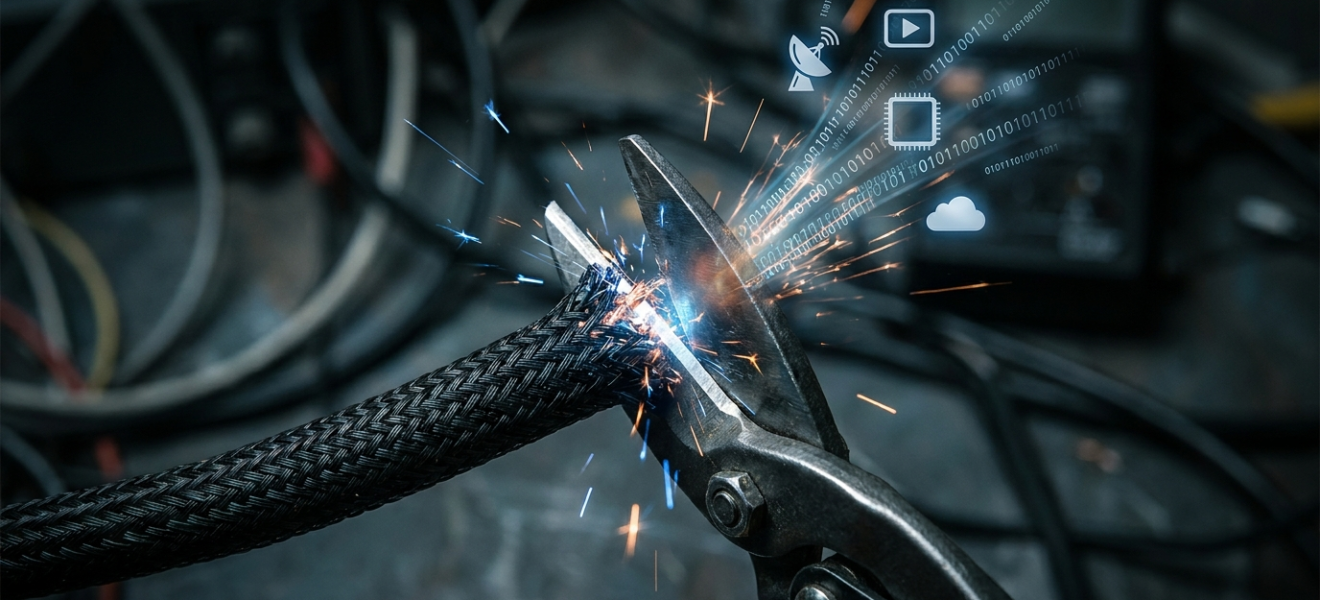
The quiet revolution happening inside your TV set
It’s a Tuesday night. You’re sprawled on your couch, remote in hand, scrolling through hundreds of channels or streaming content you don’t watch, paying for a cable bundle that costs more than your electricity bill. Sound familiar?
Now imagine a different Tuesday. Same couch. But this time, every show you love — live sports, the news, that documentary series everyone’s been talking about — is waiting for you, on any screen you own, delivered instantly over your home internet connection. No satellite dish on the roof. No cable guy appointment. No contract.
That’s not a dream. That’s IPTV. And it’s already in your home, whether you realize it or not.
First Things First — What on Earth Is IPTV?
Let’s get the jargon out of the way early, because this is genuinely simpler than it sounds.
IPTV stands for Internet Protocol Television. Strip away the technical dressing and it means exactly this: television delivered through the internet.
You already understand the basic concept. When you stream a movie on Netflix, your internet connection fetches a video file and plays it on your screen. IPTV works on exactly the same principle — except it doesn’t just give you on-demand movies. It gives you live television, scheduled broadcasts, sports, news, everything — all flowing through your broadband connection instead of through a cable or satellite signal.
Think of it this way. Traditional TV is like a water pipe — a fixed infrastructure running into your house, delivering a fixed set of channels on a fixed schedule. IPTV is like turning on a tap connected to the entire ocean. You get what you want, when you want it, on whatever device is nearest to you.
“But Wait — Isn’t That Just Streaming?”
Almost everyone asks this. And it’s a fair question.
Streaming services like Netflix or Disney+ are part of the IPTV family — but they’re only one branch of it. What makes IPTV special, and different from just loading up Netflix, is its ability to deliver live, real-time television over the internet just as reliably as a cable provider does.
We’re talking about your local news at six o’clock. A football match with zero delay. A presidential address happening right now. Live content, delivered over IP — that’s the magic trick that separates IPTV from ordinary video streaming.
Broadcasters have spent decades convincing us that live TV requires special, expensive infrastructure. IPTV is proving them wrong, one broadband connection at a time.
How Does the Picture Actually Get to Your Screen?
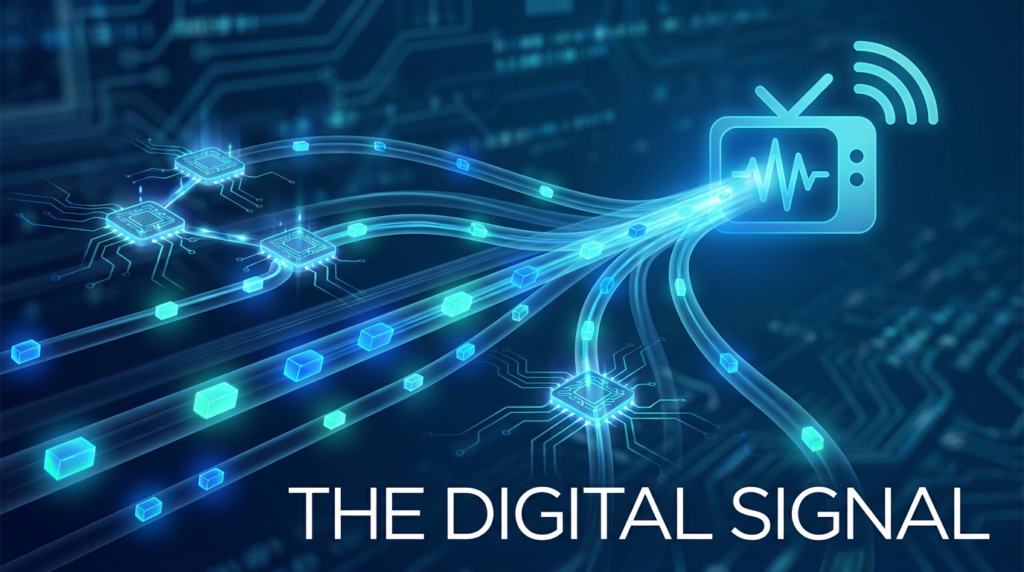
You don’t need an engineering degree to follow this — promise.
When you tune into a channel on traditional cable, you’re receiving a radio frequency signal that your cable box decodes into a picture. Simple, but inflexible. The signal exists whether you’re watching or not, and every household on your street gets the exact same one.
IPTV works differently. When you press play, your device sends a request — essentially a polite knock on a server’s door saying “excuse me, could I have Channel 4, please?” That server, which could be sitting in a data centre thousands of miles away, responds by breaking the video into tiny parcels of data and sending them racing across the internet to your device. Your TV, phone, or laptop reassembles those parcels and plays the video — all in a fraction of a second.
The clever bit is that you only receive what you ask for. Nobody is broadcasting a signal into empty rooms. It’s efficient, personalised, and — crucially — it scales. A provider can serve five customers or five million without laying a single extra cable.
The Three Faces of IPTV
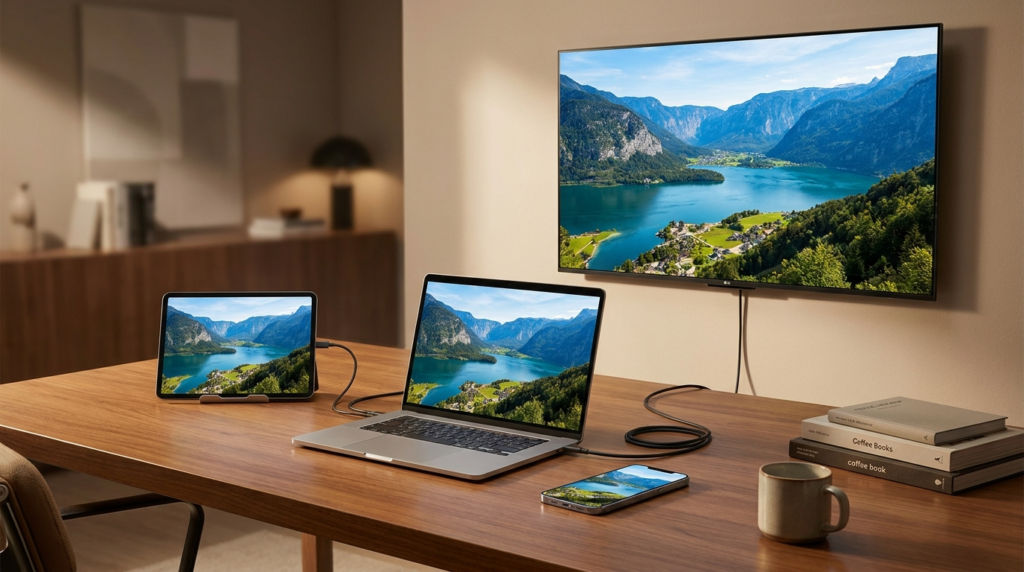
Not all IPTV looks the same. It actually comes in three distinct flavours, and you’ve almost certainly encountered all three.
Live Television is the most straightforward. Sports, news, live events — streamed to you in real time over the internet. Services like YouTube TV, Sling TV, and the BBC iPlayer’s live feature all fall into this category.
Video on Demand — or VOD — is your Netflix, your Amazon Prime, your Apple TV+. A vast library of content sitting on remote servers, ready to play the moment you click. No schedules, no waiting, no recording anything.
Time-Shifted TV is the underrated one. This allows you to watch a programme that already aired — say, the news from three hours ago, or a match you missed while cooking dinner. Your provider keeps a rolling archive, and you dip into it whenever you like. The days of scrambling to set the recorder before you leave the house are well and truly over.
Where Is IPTV Already Being Used?
Here’s where it gets interesting. IPTV isn’t just sitting in your living room. It has quietly embedded itself across entire industries.
Walk into almost any modern hotel and the television in your room is almost certainly running on IPTV. The hotel can personalise your experience — display your name on the welcome screen, offer local information, stream films — all without a single cable running to each room.
Hospitals have adopted it too. Patients confined to beds for days or weeks can access entertainment, information about their treatment, and even video calls with family — all through a bedside screen connected to the hospital’s internal network.
Universities and schools use IPTV to stream lectures and educational content across campuses, making it possible for a professor in one building to be seen clearly on screens in twenty others simultaneously.
Businesses have found it invaluable for internal communications — broadcasting company-wide announcements, training videos, and live events to employees scattered across multiple offices or even multiple countries.
Why Are People Switching?
The honest answer is: money, freedom, and convenience — roughly in that order.
A traditional cable bundle in many countries costs a small fortune each month, and a significant chunk of that is paying for dozens of channels nobody in the household ever watches. IPTV services tend to be cheaper, more flexible, and increasingly, available without any long-term contract. Don’t like the service? Cancel it this afternoon. Try another one tomorrow.
Then there’s the device freedom. IPTV doesn’t care whether you’re watching on a sixty-inch television, a laptop in a coffee shop, or a phone on a train. As long as you have an internet connection, you have your television. That kind of portability was simply impossible with traditional broadcasting.
And the picture quality — for those who care about such things — is only getting better. As internet speeds have climbed, IPTV providers have been able to offer 4K, HDR, and even early experiments with 8K content, streamed directly to compatible screens.
Is There Anything to Watch Out For?
Honest journalism demands it be said: yes, a few things.
Your internet connection matters. IPTV is only as good as the broadband it rides on. A slow or unstable connection means buffering, stuttering, or dropped streams. For comfortable HD viewing, you’ll want at least 10 to 15 megabits per second. For 4K, push that to 25 or above. For most households in 2026, this isn’t an issue — but it’s worth knowing.
Not every IPTV service is above board. The technology itself is entirely legal, but the internet being what it is, there are unlicensed, pirate services that use IPTV infrastructure to illegally distribute copyrighted content. Using them isn’t just ethically questionable — it carries real legal risk. The rule of thumb is simple: if a service is offering hundreds of premium channels for three dollars a month, something is wrong.
Reliability during peak hours can occasionally be an issue. On major sporting nights, when millions of people are all streaming the same event simultaneously, even the best providers can experience strain. This is improving rapidly — but it’s not yet as A Cut Above as a cable signal in every circumstance.
The Bigger Picture
Step back for a moment and consider what’s actually happening here.
For most of the twentieth century, the television industry was built around scarcity. There were only so many frequencies to broadcast on, only so many cable lines to lay, only so many satellite slots in orbit. That scarcity gave broadcasters enormous power — and it gave viewers very little choice.
IPTV dismantles all of that. The internet has no channel limit. It has no broadcast schedule. It doesn’t care where you live or what device you’re using. For the first time in the history of television, the viewer is genuinely in control.
The numbers reflect it. The global IPTV market is worth tens of billions of dollars and is growing at a pace that has left traditional broadcasters scrambling. In many demographics, particularly under forty, cable subscriptions are in outright freefall. The industry term for people abandoning traditional TV — cord-cutting — has gone from niche tech-world jargon to a phenomenon discussed in mainstream financial newspapers.
The Bottom Line
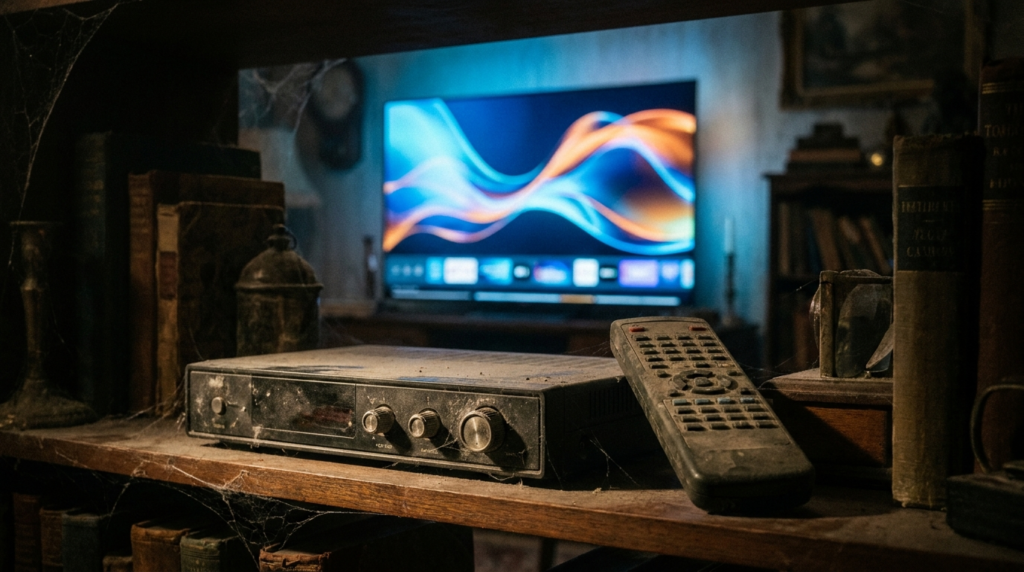
You don’t need to understand data packets or streaming protocols to appreciate what IPTV means for you as a viewer. What it means is this: the television of the future looks a lot like the internet you already use every day — open, flexible, on your terms, and available everywhere you go.
Your cable box isn’t dead yet. But it’s looking very, very tired.
And honestly? It’s had a good run.
Watch Every Match Without Blackouts
watchphoot carries 10,000+ channels across all your devices — one subscription, no geo-blocks, no contracts.
See Plans from $8.99/mo →