
Geo-restrictions, detection blocks, legal risks — here’s the complete picture before you subscribe.
If you’ve ever tried watching a show abroad and hit a “not available in your region” wall, you’ve already met geo-restriction — and you’ve probably wondered whether a VPN streaming setup is the answer. The short answer is yes, it works. But not always, not for every platform, and not without understanding some critical facts that most VPN marketing conveniently leaves out.
Here’s the complete, honest picture of VPN streaming in 2026 — without the technical jargon or the affiliate-driven hype.
What a VPN Actually Does — and What It Can’t
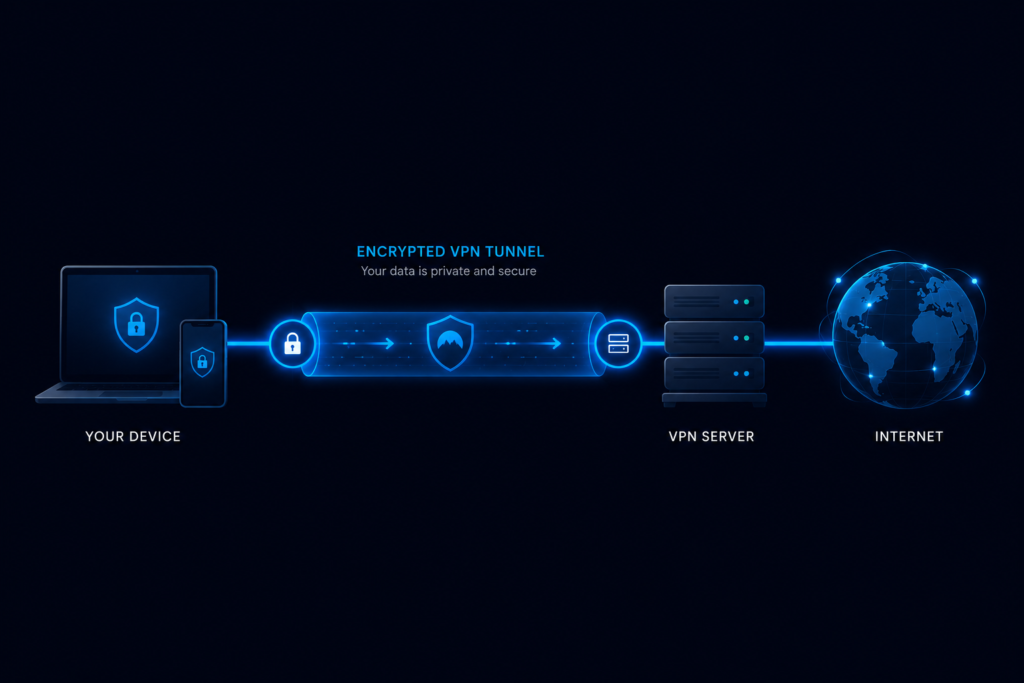
A VPN — Virtual Private Network — routes your internet traffic through a server in another country, making websites and streaming platforms believe you’re located there instead of where you actually are.
For streaming, this solves two distinct problems. First, it lets you access content libraries from other regions — the US Netflix catalogue is significantly larger than most other countries’. Second, and more practically, it lets you watch your home country’s content when travelling abroad. That second use case is entirely legitimate, widely accepted, and the most compelling reason most travellers subscribe to a VPN in the first place.
The first use case — accessing foreign libraries you wouldn’t normally have rights to — is where the picture becomes more complicated. And that’s exactly where most VPN guides stop being honest with you.
The Real Legal Picture Most Guides Get Wrong
In most countries, using a VPN to stream content is not illegal. However, it may violate the streaming platform’s Terms of Service — and that is a critical distinction. A Terms of Service violation is not a criminal offense. It is a contract issue between you and the streaming company.
The practical consequences of that violation are limited. In the worst-case scenario, the content provider will only cancel your subscription for breaching the terms of service. No fines. No legal action. No criminal record. In practice, even account suspensions are rare — most platforms simply block the stream and ask you to disable your VPN.
VPNs are legal in most countries, including the USA, Canada, Japan, the UK, and most of Europe and Latin America. However, VPNs are illegal in a handful of countries, such as North Korea, Turkmenistan, Belarus, and Iraq. Viewers in the MENA region should be aware that certain countries impose additional restrictions on VPN usage — always verify your local regulations before subscribing to any service.
How Streaming Platforms Actually Detect VPNs
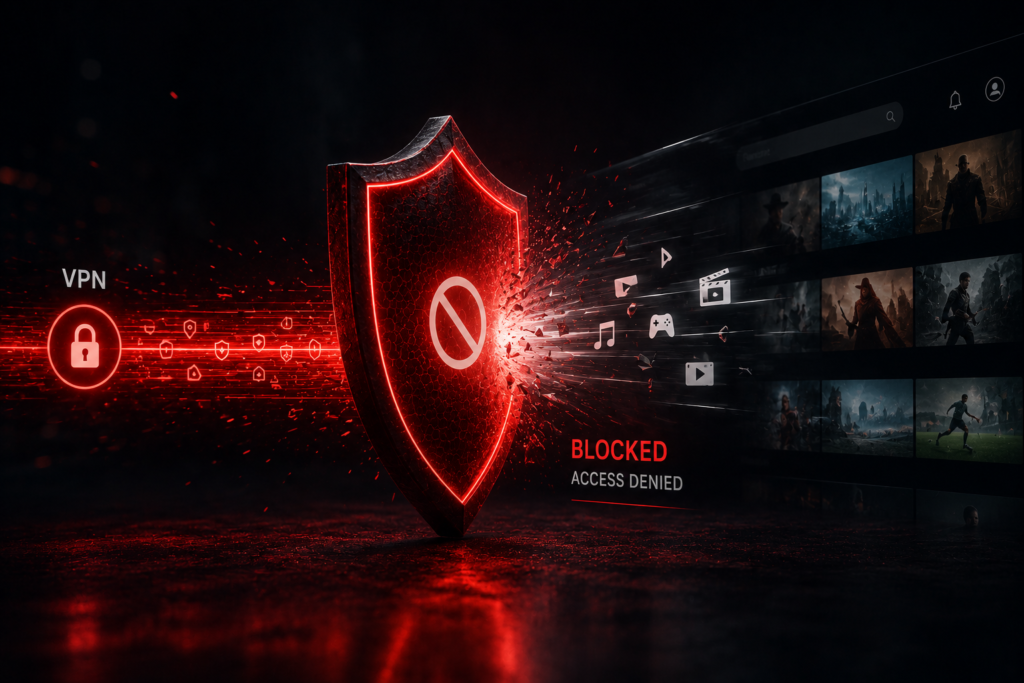
This is the part that most VPN providers prefer you didn’t know. The arms race between streaming platforms and VPN services is real, ongoing, and increasingly one-sided in the platforms’ favour.
Netflix uses commercial IP intelligence feeds, traffic pattern analysis, and WHOIS registration data to flag VPN server IP addresses automatically. When hundreds of users connect from a single IP address simultaneously, Netflix’s systems flag it as a VPN server.
Disney+ has proven even more formidable. Disney+ has some of the most sophisticated VPN detection systems in the streaming industry — even the best-performing VPNs occasionally missed the mark in testing, with top performers accessing Disney+ successfully only seven times out of ten attempts.
The honest reality: no VPN works with every streaming service every time. It is a continuous technological competition, and some days the platform wins. Any VPN provider claiming guaranteed, permanent access to every streaming service is overselling their product.
The Speed Problem Most VPN Reviews Ignore
A VPN adds a layer of encryption and routes your traffic through an additional server — both of which reduce your connection speed. For standard HD streaming this is rarely noticeable. For 4K content, however, it can be the difference between a seamless experience and persistent buffering.
NordVPN recorded speeds of up to 228Mbps on US servers during independent testing — 91% of the base connection speed — which leaves substantial bandwidth for high-quality streaming.
The practical guidance: always choose a VPN server geographically close to you for the best speeds. Use the WireGuard protocol where available — it is significantly faster than older alternatives and has become the industry standard for streaming performance.
Which Platforms Are Genuinely Hard to Access
Not all streaming services invest equally in VPN detection. Understanding this hierarchy saves time and frustration:
Most aggressive: Netflix, Disney+, BBC iPlayer — all invest heavily in detection technology and update their blocking systems regularly.
Moderate: Amazon Prime Video, Hulu — detectable but generally easier to bypass with a quality VPN and server switching.
More accessible: Smaller and regional streaming services, which typically lack the infrastructure for sophisticated VPN detection.
For IPTV services — including beIN Sports, which provides exclusive World Cup 2026 coverage across the MENA region — a VPN can restore access when travelling outside your subscription territory. Always review your provider’s terms before doing so.
The VPNs That Consistently Deliver in 2026
Out of 15 VPNs tested for streaming performance in 2026, NordVPN leads with the strongest overall results, offering reliable access to major streaming platforms and the highest average speed retention at 86%. Proton VPN, Surfshark, and Bitdefender VPN also deliver consistent unblocking results across most services.
ExpressVPN remains a strong choice for those new to VPNs, with an accessible interface and an extensive worldwide server network — currently starting at $2.44 per month with a 30-day money-back guarantee.
One rule applies universally: always choose a paid service. Free VPNs consistently underperform — they typically impose slower speeds, data limits, and prove far less reliable at bypassing geo-restrictions on major platforms like Netflix. For streaming, a free VPN is rarely worth the frustration it creates.
| VPN | Best For | Speed Retention | Simultaneous Devices | Starting Price | Money-Back |
|---|---|---|---|---|---|
| 🏆 Top Performers | |||||
| NordVPN · Editor’s pick | Overall streaming performance | 86% avg | 10 devices | ~$3.09/month · annual plan | 30 days |
| Surfshark | Families, unlimited devices | 80% avg | Unlimited | ~$1.78/month · annual plan | 30 days |
| ExpressVPN | Beginners, ease of use | Strong | 8 devices | ~$2.44/month · annual plan | 30 days |
| Proton VPN | Privacy-first users | 79% avg | 10 devices | ~$2.99/month · annual plan | 30 days |
| 📺 Platform Compatibility | |||||
| Netflix | NordVPN ✓ | Surfshark ✓ | ExpressVPN ✓ | Proton VPN ✓ | |
| Disney+ | NordVPN ✓ | Surfshark ✓ | ExpressVPN ✓ | Proton VPN ~ | |
| Amazon Prime | NordVPN ✓ | Surfshark ✓ | ExpressVPN ✓ | Proton VPN ✓ | |
| BBC iPlayer | NordVPN ✓ | Surfshark ✓ | ExpressVPN ✓ | Proton VPN ~ | |
How to Use a VPN for Streaming Effectively
If you subscribe to a VPN for streaming, these practical steps will save you significant time and frustration.
Switch servers when blocked. A VPN detection error doesn’t mean your VPN has failed — it means that specific server’s IP has been flagged. Try a different server in the same country before giving up.
Consider a dedicated IP address. A dedicated IP is the single most effective strategy for avoiding Netflix VPN blocks — it behaves like a normal household connection rather than a shared VPN server flagged by hundreds of simultaneous users.
Prioritise the legitimate use case. Watching your home country’s content while travelling abroad carries no meaningful risk and represents the clearest, most widely accepted application of VPN streaming.
Keep your VPN app updated. Providers regularly push server updates specifically to stay ahead of streaming platform detection. An outdated app is significantly more vulnerable to being blocked.
Use the money-back guarantee before committing. Every major VPN listed above offers 30 days to test the service. Use that window to verify access to the specific platforms you care about before paying for a longer subscription.
The Honest Verdict: VPN Streaming in 2026
VPN streaming is legal in the vast majority of the world, genuinely effective with the right provider, and solves real problems for travellers and cord-cutters alike. The limitations are equally real — aggressive platform detection, the persistent underperformance of free services, and Terms of Service considerations all deserve your attention before subscribing.
The technology works. The key is choosing a reputable paid provider, understanding which platforms you’re targeting, and approaching the whole thing with realistic expectations rather than the promises of VPN marketing.
Done right, a quality VPN is one of the most genuinely useful tools in a cord-cutter‘s arsenal.
Watch Every Match Without Blackouts
watchphoot carries 10,000+ channels across all your devices — one subscription, no geo-blocks, no contracts.
See Plans from $8.99/mo →